.svg)

Why Is My Lawn Turning Yellow? Common Causes and How to Identify Them
Key Takeaways
- Yellow grass can result from nutrient deficiencies, watering problems, heat stress, disease, insects, soil conditions, fertilizer injury, pet damage, or seasonal dormancy.
- The pattern of yellowing can help identify the cause: uniform fading, rings, straight bands, sprinkler-shaped areas, and isolated patches often point to different problems.
- Utah soils commonly range from pH 7.2 to 8.3, and higher pH can reduce iron availability to grass roots and contribute to iron chlorosis.
- Loose turf, damaged roots, expanding patches, fungal growth, wet soil, or recurring yellow areas can indicate a larger lawn health problem.
- If yellowing spreads, returns, or persists during active growth, a professional lawn evaluation can help identify the underlying cause before further damage occurs.
Your lawn is turning yellow because chlorophyll production has declined or the grass cannot access enough water, oxygen, or nutrients. Heat, disease, insects, application injury, and root damage can look identical. Pattern, timing, roots, crowns, and site conditions provide stronger evidence than color alone.
What Are the Most Common Causes of Yellow Grass?
The most common causes of yellow grass are nutrient deficiencies, watering imbalances, heat, disease, grubs, restricted soil, fertilizer injury, pet damage, and dormancy. Causes can overlap, so diagnosis should start with the pattern and the damaged plant part.
Nutrient Deficiencies
Nutrient deficiencies turn grass yellow when the plant cannot produce enough chlorophyll or absorb nutrients from the soil. Some deficiencies include:
- Nitrogen deficiency: Large areas fade evenly. Older leaves turn yellow first, growth slows, and the lawn becomes thinner.
- Iron deficiency: New leaves turn yellow while the veins remain green. This pattern is called interveinal chlorosis.
- Magnesium deficiency: Older leaves turn yellow between the veins. The tips or edges may later curl.
- Nutrient lockout: Nutrients are present, but the roots cannot absorb them because of compaction, saturated soil, drought, root damage, or high soil pH.
Soil above pH 7.0 is alkaline. High-pH soil can make iron harder for roots to absorb, even when the soil contains enough iron.
Watering Imbalances
Watering imbalances turn grass yellow because both dry and saturated soil interfere with root function. For instance:
- Underwatering: Grass becomes dull green or blue-gray, holds footprints, folds its blades, and later turns yellow. Damage often begins on slopes, in shallow soil, or beside hot pavement.
- Overwatering: The soil remains wet, the lawn may feel soft, and low areas turn yellow while higher areas stay green. Water-filled soil contains less oxygen, which weakens roots and nutrient uptake.
- Uneven irrigation: Yellowing appears in arcs, wedges, dry bands, or areas with sharp edges. These patterns often match blocked, misaligned, or poorly spaced sprinkler heads.
Heat and Environmental Stress
Heat and environmental stress turn grass yellow when the lawn needs more water than its roots can supply or when poor light reduces photosynthesis.
Cool-season turf leaves grow best at about 60°F to 75°F, while roots grow best when soil temperatures are around 50°F to 65°F. Root damage becomes more likely when soil temperatures rise above 85°F.
Look for yellowing:
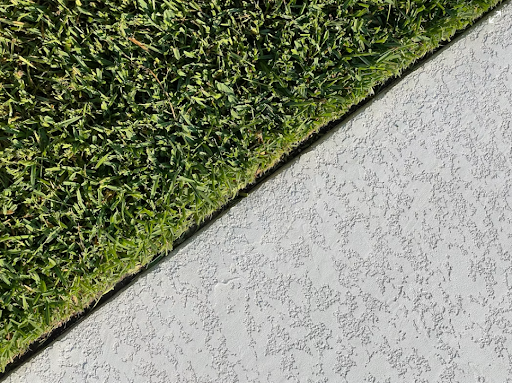
- Beside driveways, patios, walls, and curbs
- On exposed slopes
- Over shallow soil or buried construction debris
- In compacted areas
- Beneath dense trees or structures
These locations combine extra heat, limited moisture, and restricted roots. In shaded areas, grass also receives less light while tree roots compete for water.
Salt buildup can cause yellow or brown grass along pavement, runoff paths, or concentrated application areas. Salt makes it harder for roots to absorb water, even when the soil appears moist.
Temperatures above 85°F combined with little rain or irrigation for two to three weeks can cause widespread stress. Most cool-season grass can recover when cooler, wetter conditions return, but shallow-rooted or already weakened areas may suffer lasting damage.
Lawn Diseases
Lawn diseases turn grass yellow when susceptible turf, an active pathogen, and suitable weather occur at the same time. Disease becomes more likely when patches expand, return in the same season, form active outer edges, or contain lesions, fungal growth, or damaged roots. A few diseases are:
- Necrotic ring spot: Straw-colored rings or arcs, some having a green frog-eye center. The fungus damages roots and is active at soil temperatures of about 65°F to 80°F. Symptoms often become clearer during midsummer heat.
- Rust: Leaves first develop pale-yellow specks, followed by yellow-orange pustules. Orange powder may rub onto shoes, clothing, or a white cloth. Rust is more likely during periods of moderate temperatures, high humidity, and extended leaf wetness.
- Brown patch: Irregular yellow-brown patches expand during warm, humid weather. The disease is favored when nights stay above 68°F and daytime temperatures average 80°F or higher. Temperature alone does not confirm the disease.
- Snow mold: Matted, straw-colored patches appear as snow recedes. White, gray, or pink fungal growth may cover the leaves. Gray snow mold is favored by prolonged snow cover and cool, wet conditions, while the crown often remains alive and can produce new growth as conditions improve.
Grub Activity
Grub activity turns the grass yellow because grubs feed on roots. With fewer healthy roots, the grass cannot absorb enough water or nutrients.
Common signs include:
- Irregular yellow patches
- Rapid wilting during warm weather
- Short or missing roots
- Soft turf that lifts like loose carpet
- Birds, skunks, or raccoons digging in the area
Grubs are often found near the green edge of an expanding patch, where living roots remain. Utah thresholds range from about 3–5 to 30–50 grubs per square foot, depending on the species and the condition of the lawn.
Poor Soil Conditions
Poor soil conditions turn grass yellow because roots cannot receive enough air, water, or nutrients.
- Compaction reduces pore space, water movement, oxygen, and root depth.
- Poor drainage keeps roots saturated and limits oxygen.
- Sandy soil dries quickly and loses nitrogen more easily.
- Shallow soil or buried debris restricts root growth and increases heat stress.
- Excessive thatch can interrupt water movement and keep roots near the hot, dry surface.
A thin thatch layer can protect the lawn, but a layer deeper than about ½ inch may become harmful.
Fertilizer-Related Stress
When concentrated salts pull moisture from the leaves and roots or when application rates overlap, fertilizer-related stress turns the grass yellow.
Look for:
- Parallel stripes
- Straight bands
- Overlap lines
- Repeated passes
- Spill-shaped spots
These patterns support fertilizer injury because diseases and soil problems rarely follow equipment-shaped lines.
Sudden yellowing after an application is more likely to be salt injury. Gradual, even fading is more consistent with a nutrient deficiency or root problem. Excess nitrogen can also produce fast leaf growth, use stored carbohydrates, and make the lawn more vulnerable to heat, drought, and diseases such as brown patch.
Pet Damage
Pet damage turns grass yellow because concentrated urine contains enough salts and nitrogen to injure the center of the spot.
A typical urine spot has:
- A 3- to 6-inch yellow or brown center
- A 6- to 12-inch dark-green outer ring
- Several repeated circles in the pet’s preferred area
The center receives the highest concentration, while the diluted nitrogen around the edge feeds the grass and creates darker growth. Turf death may occur within 24 hours or less during hot, dry weather.
Natural Seasonal Changes
Natural seasonal changes turn grass yellow when cool-season turf enters dormancy or slows its growth during unfavorable weather.
Heat, drought, winter cold, shorter days, cloudy weather, and cool spring soil can reduce chlorophyll production and nutrient uptake. Dormant grass usually fades across a broad area rather than forming sharp lines or expanding patches.
Dormant turf:
- Remains firmly rooted
- Retains living crowns
- Changes color across a wide area
- Begins growing again when conditions improve
Damaged turf develops weak anchoring, short or decayed roots, damaged crowns, thinning, or bare soil.
How Can Yellow Grass Causes Be Distinguished?
The pattern, timing, and condition of the affected grass can help distinguish between common causes of yellowing. The table below summarizes the most useful clues:
When Does Yellow Grass Indicate a Larger Lawn Health Issue?
Yellow grass is more likely to indicate an underlying lawn health issue when the discoloration persists, spreads, returns in the same area, or appears alongside other visible signs of turf damage.
A professional lawn evaluation is especially appropriate when:
- Yellowing continues while the lawn is actively growing.
- The affected area continues to expand, or new yellow patches appear.
- Yellowing repeatedly returns in the same location.
- Grass develops rings, straight bands, unusual patterns, or sharply defined patches.
- Turf lifts easily from the soil or has short, damaged, or decayed roots.
- The soil remains consistently wet, becomes unusually hard, or drains poorly.
- Yellowing occurs alongside visible insects, fungal growth, leaf lesions, or other signs of disease.
- The affected area begins thinning significantly or develops bare soil.
- Yellowing follows a fertilizer or other lawn treatment and appears in distinct stripes, bands, or overlap patterns.
If yellowing is broad, seasonal, and the grass remains firmly rooted without progressive damage, the change may be temporary. Persistent or worsening yellowing during the active growing season is more likely to require professional evaluation.
Why Choose Stewart’s Lawn Service for Yellow Grass?
Stewart's Lawn Service has helped Utah homeowners care for healthier lawns since 1972 with programs developed for local soils, climate, and cool-season grasses.
Our Lawn Care Program includes:
- Scheduled visits with professionally timed fertilization, weed control, and Grub Control.
- Liquid compost, liquid aeration, and hydration treatments.
- On-site evaluations that assess yellowing patterns, root health, soil conditions, and seasonal stress.
- Recommendations based on the underlying cause rather than surface symptoms.
If your lawn continues to yellow or decline, schedule a professional evaluation with Stewart's to identify the cause before root or crown damage becomes more severe.
FAQs
How can I tell if yellow grass is temporary or a serious problem?
Yellow grass is more likely to be temporary when it appears broadly during seasonal heat, drought, or winter dormancy and the turf remains firmly rooted. Yellowing is more concerning when it forms distinct patches, spreads, returns in the same location, or is accompanied by thinning, root damage, or bare soil.
Can only certain areas of a lawn turn yellow while the rest remain healthy?
Yes. Localized yellowing can result from differences in sprinkler coverage, soil depth, compaction, drainage, shade, heat exposure, pet activity, or insect damage. The location and pattern of the yellow area can help narrow down the cause.
How long should yellow grass be observed before requesting an assessment?
There is no fixed waiting period. Yellowing that appears suddenly after an application, spreads quickly, or is accompanied by wilting, loose turf, or visible root damage should be assessed promptly. Gradual seasonal fading can be watched for changes as weather and growing conditions improve.
When is yellow grass a sign of an underlying lawn health issue?
Yellow grass is more likely to indicate an underlying problem when it persists during active growth, repeatedly returns in the same area, or occurs with poor drainage, compacted soil, disease symptoms, insect activity, or weak roots. Recurring localized yellowing is especially worth investigating because the same site condition may continue to stress the turf.
Why is an on-site lawn evaluation the best way to identify yellow grass?
An on-site evaluation allows the condition of the turf, roots, soil, moisture, and surrounding site to be considered together. This helps distinguish problems that can look similar from the surface, such as nutrient deficiency, irrigation issues, disease, insect damage, compaction, and heat stress.