.svg)

How to Minimize Snow Damage on Your Utah Lawn
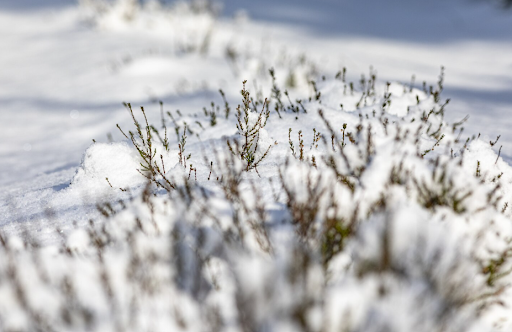
You can minimize snow damage on a Utah lawn by reducing conditions that leave turf wet, compacted, salt-stressed, or vulnerable to winter injury. Loose snow can insulate dormant grass, but long-lasting snow, packed snow, ice, deicing salt, and repeated freeze-thaw cycles can damage leaves, crowns, and roots.
Key Takeaways
- Gray snow mold causes gray, white, or straw-colored patches after snow melts. It usually damages the grass leaves, while the base of the grass often stays alive.
- Pink snow mold causes patches with pink edges or pink growth. It can appear with or without snow and may cause more serious damage than gray snow mold.
- Brown strips near sidewalks or driveways can point to deicing salt damage. Salt makes it harder for grass roots to absorb water.
- Dead patches in low areas can be caused by melting and refreezing. Water collects around the grass, then freezes and can damage the part that produces new growth.
- Dry brown patches in sunny or windy areas can point to winter drying. Evenly brown grass that turns green again in spring is usually just dormant.
- Compacted soil and thatch thicker than about 1/2 inch can weaken grass. Both can limit healthy root growth and reduce the movement of air and water through the soil.
Ways to Minimize Snow Damage to a Utah Lawn
You can prevent snow damage to your Utah lawn by reducing the conditions that leave grass wet, compacted, salt-stressed, or covered for too long.
Prepare Your Lawn Before the First Snow
You can prepare your lawn before the first snow by addressing compaction, excess thatch, and nutrient problems that can make grass more vulnerable during winter.
Important conditions to consider include:
- Compacted soil: Repeated pressure packs soil particles together. This leaves less room for air and water around the roots.
- Excess thatch: Thatch deeper than about 1/2 inch can limit healthy root growth and make turf more vulnerable to winter stress and disease.
- Heavy late-season growth: Too much late-season nitrogen can produce soft grass growth that is more vulnerable to snow mold.
- Grass type: Fine fescues and perennial ryegrass are generally more resistant to gray snow mold than Kentucky bluegrass. Pink snow mold can affect all cool-season grasses.
Spread Out Large Snow Piles
Spread out large snow piles because large snow piles are less likely to cause snow damage to grass when they do not remain concentrated over the same area for long periods. Deep piles keep grass covered, wet, and matted longer than normal snow and can increase the risk of snow mold, ice injury, and salt damage.
The location and appearance of the damage can help identify the cause:
- Gray or white matted grass: This is more consistent with gray snow mold, especially after long-lasting snow cover.
- Brown grass beside pavement: Deicing salt is more likely when snow from a treated driveway, sidewalk, or road is piled nearby.
- Dead grass in a low area: Meltwater may have collected around the grass before freezing again.
Deicing salt is particularly important in Utah's dry climate because salts can build up in the soil. High salt levels make it harder for grass roots to absorb water, which can leave turf burned, stunted, or patchy.
Keep Traffic Off Snow-Covered Grass
Keeping repeated foot and vehicle traffic off snow-covered or frozen grass reduces the risk of broken grass tissue and soil compaction. Frozen grass is stiff and more easily injured, while pressure on moist soil can pack soil particles closer together.
Traffic damage usually has a recognizable pattern:
- Footprints or narrow brown paths: Damage follows the exact route people or pets repeatedly traveled.
- Tire-shaped tracks: The shape makes vehicle pressure more likely than a lawn disease.
- Thin grass along the same route: Repeated pressure may indicate soil compaction beneath the damaged turf.
Prevent Snow Mold on Your Lawn
You can reduce the risk of snow mold by limiting the lawn conditions that allow grass to remain wet, matted, and covered for long periods. Shaded areas and the north or east sides of buildings can remain covered after snow has melted elsewhere.
The appearance and timing can help distinguish them:
- Gray snow mold: Look for gray, white, tan, or straw-colored matted patches after long-lasting snow. Small brown or dark fungal structures may also appear. The disease usually damages the leaves while the grass crown remains alive, allowing new growth to return.
- Pink snow mold: Look for patches with light pink edges, pink-white fungal growth, or pink spores. Unlike gray snow mold, it does not require snow cover and can remain active during cool, wet spring weather.
- More severe pink snow mold: Severe infections can reach the crowns and roots of susceptible grasses. Kentucky bluegrass, perennial ryegrass, and red fescue more commonly develop leaf damage and usually recover.
Check Your Lawn After the Snow Melts
Check your lawn after the snow melts for the location, color, shape, and recovery pattern of damaged grass.
Low areas deserve particular attention after freeze-thaw weather. During a warmer period, the grass crown can take up water. If a hard freeze follows, ice crystals can form inside the crown, rupture its cells, and kill the plant.
Dry brown patches on exposed or windy ground point toward a different problem. These areas can lose moisture when protective snow cover is limited. By comparison, evenly straw-colored grass that later turns green is usually dormant rather than dead.
Know When Winter Damage Needs Professional Attention
Winter damage needs professional attention when affected grass does not recover with the surrounding lawn, the same areas decline repeatedly, or the damage suggests problems involving crowns, roots, disease, salt, or compacted soil.
Signs that deserve closer evaluation include:
- Large or recurring matted patches: Repeated damage can indicate ongoing snow mold conditions.
- Brown areas that stay brown after nearby grass greens: This can indicate crown or root injury rather than temporary leaf damage.
- Repeated winter lawn damage in low areas: Meltwater and refreezing may be injuring the grass crown.
- Hard, thin, or sparse areas: Compacted soil may be limiting air, water movement, and healthy root growth.
How Stewart's Can Help With Snow-Damaged Utah Lawns
Stewart's can evaluate snow-damaged Utah lawns by looking at the pattern, location, soil condition, disease signs, compaction, and spring recovery.
Stewart's has served Utah homeowners since 1972. Depending on the findings during an on-site evaluation, professional Utah winter lawn care may include:
- Six-visit Lawn Care Program: Professional fertilization, weed control, and grub control.
- Professional aeration: It helps relieve compacted soil, so air and water can move more effectively through the root zone.
- On-site evaluation: It helps identify why the same areas remain thin, damaged, or slow to recover.
If your lawn remains brown after surrounding turf has recovered, contact Stewart's Lawn for an on-site evaluation.
FAQs
Can heavy snow damage a Utah lawn?
Yes, heavy snow can damage a Utah lawn when deep or packed cover remains much longer than the surrounding snow. Long-lasting cover can mat turf, increase snow mold risk, delay spring recovery, and contribute to ice-related crown injury.
Should I remove snow from my lawn?
No, normal loose snow usually does not need to be removed from a Utah lawn because it can insulate dormant grass. Greater risk comes from deep piles, packed snow, ice layers, or snow carrying deicing salt from pavement.
Is it bad to pile snow on grass?
Yes, large snow piles can damage grass when they remain much longer than the surrounding snow or contain deicing salt. Slow melting keeps turf wet longer, while meltwater can refreeze or carry salt into the soil around roots.
How do I prevent snow mold on my Utah lawn?
You can reduce snow mold risk by addressing excessive thatch, compacted soil, and heavy late-season growth before winter. Professional lawn care can correct these conditions and reduce the cold, wet environment that allows snow mold to develop.
Can Stewart's help with snow-damaged grass?
Yes, Stewart's Lawn can help by evaluating snow-damaged Utah grass and identifying the likely cause. An on-site evaluation can distinguish snow mold, compaction, salt exposure, poor drainage, crown injury, and winter drying to determine appropriate professional lawn care.