.svg)

Common Tree Diseases in Utah
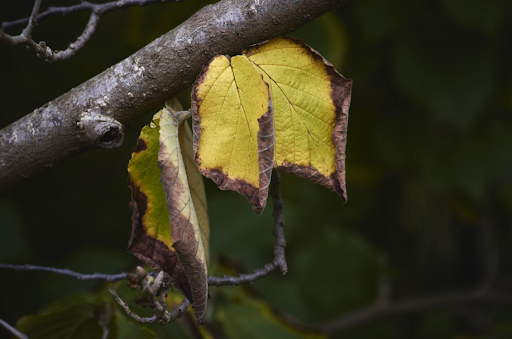
Common tree diseases in Utah include anthracnose, Cytospora canker, powdery mildew, aspen leaf spot, fire blight, Phytophthora root rot, Dothistroma needle blight, oak leaf blister, juniper rusts, Verticillium wilt, and Dutch elm disease.
Disease risk varies with the pathogen. For instance, cool, wet spring weather favors many leaf diseases, while drought, root problems, bark injuries, and other tree stress can increase vulnerability to cankers and decline.
Key Takeaways
- Cool, wet springs favor anthracnose, aspen leaf spot, and oak leaf blister.
- Warm, wet bloom periods increase fire blight risk.
- Red-banded pine needles strongly suggest Dothistroma needle blight.
- Branch-by-branch wilt can point to vascular disease or serious root damage.
- Root disease can be advanced before canopy symptoms appear.
12 Common Tree Diseases in Utah Homeowners Should Watch For
Utah homeowners should watch for leaf diseases, cankers, root rots, and vascular diseases. Dry summers, alkaline soils, and repeated winter freeze-thaw cycles can stress trees and weaken their natural defenses.
1. Anthracnose
Anthracnose is a fungal disease of Utah trees that damages young leaves, shoots, and sometimes twigs during Utah’s cool, wet springs. Different host-specific fungi cause the disease.
- Trees commonly affected: Mainly sycamore; maple, oak, and ash can also develop anthracnose.
- Symptoms & early warning signs: Tan, brown, or black areas often follow leaf veins. Sycamores may also develop early leaf drop, dead shoots, twig cankers, and clusters of short shoots called witches’ brooms.
- Causes and how it spreads: Fungi survive in infected leaves, twigs, or branches. Wind and rain carry spores to new growth during cool, wet spring weather.
2. Cytospora Canker
Cytospora canker is a common Utah tree disease caused by Cytospora fungi that mainly attack stressed or injured trees.
- Trees commonly affected: Aspen, poplar, willow, birch, peach, cherry, apricot, apple, mountain ash, and some spruce.
- Symptoms & early warning signs: Sunken brown or gray cankers, branch dieback, sap or gum, and tiny black fungal structures in the bark.
- Causes and how it spreads: The fungus enters through sunscald, frost injury, broken branches, pruning wounds, insect damage, or other bark injuries. Cankers expand over months or years and may girdle branches. Infection is favored by spring temperatures around 60–80°F, while wind and rain spread spores.
3. Powdery Mildew
Powdery mildew causes white or gray fungal growth on young leaves and shoots and can spread during relatively dry Utah weather.
- Trees commonly affected: Cherry, crabapple, aspen, sycamore, oak, and other susceptible hosts. On Utah cherries, the disease is caused by Podosphaera cerasi.
- Symptoms & early warning signs: Small pale or white patches develop first on young leaves, followed by curling, puckering, brittle tissue, dead areas, reduced growth, or early leaf drop.
- Causes and how it spreads: Wind carries spores to young tissue. On cherries, spores germinate at 60°F or higher; temperatures above 85°F slow disease growth. Young leaves are vulnerable, while mature leaves become resistant.
4. Aspen Leaf Spot
Aspen leaf spot is a widespread Utah fungal disease caused by Marssonina populi.
- Trees commonly affected: Mainly quaking aspen; related poplars and willows can also be affected.
- Symptoms & early warning signs: Dark-brown spots with lighter centers or yellow margins enlarge into dead blotches and may cause early leaf drop.
- Causes and how it spreads: Wind and rain carry spores to emerging leaves during cool, wet weather. Repeated heavy spring defoliation can reduce tree vigor.
5. Fire Blight
Fire blight is a bacterial Utah tree disease caused by Erwinia amylovora that can spread from blossoms into shoots and larger branches.
- Trees commonly affected: Apple, pear, crabapple, hawthorn, cotoneaster, mountain ash, and pyracantha.
- Symptoms & early warning signs: Blackened blossoms and leaves, wilted shoots, sunken cankers, bacterial ooze, and the distinctive curved shepherd’s-crook shoot tip.
- Causes and how it spreads: Bacteria overwinter in cankers and reach blossoms through moisture and insects. They become active around 50°F and multiply rapidly in warm weather. Just two hours of moisture can allow blossom infection.
6. Phytophthora Root Rot
Phytophthora root rot is a Utah tree disease caused by fungus-like water molds in the Phytophthora genus that attack roots and crowns in persistently wet soil.
- Trees commonly affected: Junipers, conifers, apple, cotoneaster, and other susceptible Utah trees.
- Symptoms & early warning signs: Fine roots become reddish-brown or black and decay. Above ground, foliage may discolor, growth slows, branches decline, and badly damaged trees may become poorly anchored.
- Causes and how it spreads: Wet soil allows Phytophthora spores to reach and infect roots. Canopy symptoms may not appear until substantial root damage has occurred.
7. Dothistroma Needle Blight
Dothistroma needle blight, or red band disease, is a fungal disease of Utah pine trees identified by characteristic reddish bands across needles.
- Trees commonly affected: Austrian and ponderosa pines are especially susceptible.
- Symptoms & early warning signs: Tan, brown, or red bands develop across needles. The tip beyond the band dies while the base may remain green. Tiny black fruiting structures appear in dead tissue.
- Causes and how it spreads: The fungus produces the toxin dothistromin, which creates the red band. Wind and rain spread spores during wet weather. Symptoms may take four weeks to six months to appear.
8. Coryneum or Shothole Blight
Coryneum, or shothole blight, is a Utah stone-fruit tree disease caused by Wilsonmyces carpophilus.
- Trees commonly affected: Peach, nectarine, and apricot are most commonly affected; sweet and tart cherry can also develop it.
- Symptoms & early warning signs: Purple-to-tan leaf spots lose their dead centers, creating round shot holes. Buds, twigs, blossoms, and fruit may also develop lesions, cankers, or gumming.
- Causes and how it spreads: The fungus survives in infected buds and twig cankers and spreads mainly through rain. Infection can occur after 24 hours of continuous moisture at 36°F or only six hours at 77°F.
9. Oak Leaf Blister
Oak leaf blister is a mostly cosmetic fungal disease of Utah trees caused by Taphrina caerulescens during Utah’s cool, wet springs.
- Trees commonly affected: Gambel oak, or scrub oak, is the Utah oak most often affected.
- Symptoms & early warning signs: Pale-green raised or sunken blisters measure about ¼–½ inch across, later turn brown, and may merge or distort leaves.
- Causes and how it spreads: Spores infect newly developing leaves during cool, moist spring weather. There is only one infection period each year, with no secondary spread later in the season.
10. Cedar-Apple and Related Juniper Rusts
Juniper rusts are Gymnosporangium fungal Utah tree diseases that alternate between junipers and rose-family trees.
- Trees commonly affected: Utah junipers can serve as one host, while hawthorn, serviceberry, apple, or crabapple can serve as the other.
- Symptoms & early warning signs: Junipers develop woody galls with bright orange, gelatinous growth during wet spring weather. The alternate host may develop yellow-orange leaf spots, swollen twigs, or fruit damage.
- Causes and how it spreads: The fungus requires two different host groups to complete its life cycle, with spores moving from junipers to rose-family hosts and later back to junipers.
11. Verticillium Wilt
Verticillium wilt is a soilborne fungal disease of Utah trees that blocks water movement through susceptible trees.
- Trees commonly affected: Maple and catalpa are important Utah hosts; elm, linden, goldenrain tree, and other susceptible deciduous trees can also be affected.
- Symptoms & early warning signs: Sudden wilt may begin on one branch or one side of the canopy. Leaves yellow or brown, and green, brown, or black streaking may appear in the sapwood.
- Causes and how it spreads: Verticillium dahliae and related fungi enter through roots and invade the water-conducting tissue. Survival structures can remain in soil for 10 years or more.
12. Dutch Elm Disease
Dutch elm disease is a fungal vascular tree disease of elms recorded primarily in Northern Utah.
- Trees commonly affected: Susceptible elm species, especially American elm. Siberian elm can host the bark beetles involved in transmission, but it is generally less severely affected.
- Symptoms & early warning signs: Flagging often appears first, with one upper branch yellowing, wilting, and browning while the rest of the canopy remains green. Dark vascular streaking may develop beneath the bark.
- Causes and how it spreads: Ophiostoma fungi are carried by elm bark beetles and can also move between nearby trees through connected roots. Utah elm bark beetles emerge from about April to mid-May and continue through the summer, with two to three generations per year.
Seasonal Tree Diseases in Utah
Seasonal timing helps identify tree diseases in Utah by matching visible symptoms with the weather conditions and growth stage when each disease is most active.
Professional Tree Disease Diagnosis and Treatment from Stewart's Lawn
Stewart’s Lawn has served Utah homeowners since 1972. If you notice diseased trees in Utah, an on-site evaluation can help identify the cause and determine whether tree disease treatment in Utah is appropriate.
Our scheduled evaluation may assess:
- leaf, needle, bark, crown, and root condition;
- whether decline is one-sided, branch-by-branch, or widespread;
- cankers, fungal growth, vascular discoloration, root decay, or insects;
- recent moisture, heat, wounds, and other tree stress.
If your tree has recurring leaf damage, cankers, branch death, vascular discoloration, or root decline, schedule a professional tree health evaluation with Stewart’s Lawn today.
FAQs
How do I know if my tree has a disease or is simply stressed by Utah's dry climate?
You can tell if your tree has a disease or is simply stressed by Utah's dry climate by looking at the type and pattern of damage. Disease is more likely to cause distinct signs such as vein-centered spots, cankers, fungal growth, bacterial ooze, red needle bands, vascular streaking, or decayed roots. Dry-climate stress more often causes widespread leaf scorch, canopy thinning, wilting, or reduced growth. Drought stress can also weaken trees and make them more vulnerable to diseases such as Cytospora canker.
What is the most common tree disease found in Utah?
There is no single most common tree disease found in Utah because different diseases affect different tree species. Anthracnose affects several shade trees, aspen leaf spot is widespread on aspen, and fire blight and Cytospora canker affect several commonly grown Utah trees.
Can tree diseases spread to nearby healthy trees?
Yes, tree diseases can spread to nearby healthy trees through wind, rain, insects, infected plant material, roots, or contaminated soil, depending on the disease. For example, fire blight bacteria can spread through moisture and insects, while anthracnose and Dothistroma spores spread during wet weather.
Can overwatering cause tree diseases in Utah?
Yes, overwatering can cause tree diseases in Utah, particularly Phytophthora root rot. Phytophthora thrives in continually wet soil, where it attacks fine roots and limits water and nutrient uptake. By the time canopy thinning, yellowing, or wilting appears, substantial root damage may already have occurred.
Are tree diseases more common after wet spring weather?
Yes, tree diseases can become more common after wet spring weather because prolonged moisture favors several important Utah tree pathogens. Anthracnose, aspen leaf spot, oak leaf blister, fire blight, and juniper rusts can all become more active under wet spring conditions. Actual disease risk also depends on temperature, host species, growth stage, and how long susceptible tissue remains wet.