.svg)

Bugs That Look Like Termites
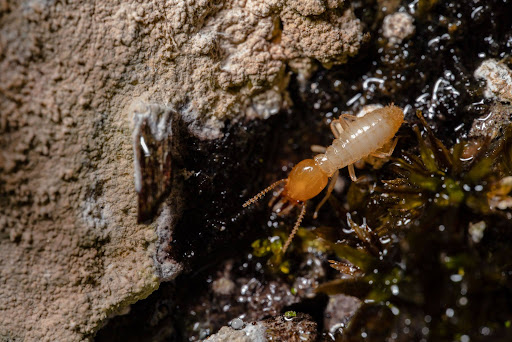
Bugs that look like termites and are commonly mistaken for termites include flying ants, carpenter ants, powderpost beetles, and carpenter bees. This confusion is caused by these insects having similar physical or behavioral traits to termites. Identifying the insect can help determine the type of damage it may have caused and the right approach to eradicate it.
Key Takeaways
- Termites have straight antennae, a thick waist, and two pairs of equal-length wings. These features set them apart from most look-alikes.
- Because of their physical resemblance, homeowners most often confuse termites with flying ants, carpenter ants, powderpost beetles, and carpenter bees.
- Some wood-associated pests, like acrobat ants, booklice, and wood roaches, resemble termites in behavior or habitat but not necessarily in appearance.
- Wood damage alone doesn't confirm a termite problem, but the type of damage and the insect causing it matter just as much.
- A professional inspection is the most reliable way to identify the pest and understand the extent of the issue.
What Do Termites Look Like?
Termites are typically pale, though color can vary by species and caste.
- Swarmers: Dark, almost black body and legs
- Workers: Pale, cream color
- Soldiers: Dark Orange- Brownish color and larger head and mouthparts
These colors are similar to a few other termite look-alikes.
However, a few features consistently define them:
- Straight, bead-like antennae rather than bent or elbowed ones
- A thick, uniform waist with no visible pinch between the thorax and abdomen
- Two pairs of wings of equal length and shape, seen on swarmers (reproductive termites) during mating season
- Soft bodies that are typically smaller than half an inch long
Termite swarmers are often the first sign homeowners notice, since worker termites rarely leave the wood or soil they're feeding on. Because swarmers fly, shed their wings, and appear in clusters, they're frequently confused with other flying insects, which is where most of the mix-ups on this list begin.
7 Bugs That Look Like Termites
Most often, the bugs mistaken for termites are flying ants, carpenter ants, powderpost beetles, carpenter bees, acrobat ants, booklice, and wood roaches. Each one shares a trait with termites. Some share a wood-associated habitat, swarming pattern, or similar type of damage. These similarities lead to misidentification.
1. Flying Ants
Appearance: Flying ants have a narrow, pinched waist, bent (elbowed) antennae, and two pairs of wings of unequal length. The front wings are noticeably longer than the back ones.
How they differ from termite swarmers:
Where they are commonly found: Flying ants tend to swarm outdoors near light sources, mulch beds, and areas with decaying wood, often on warm afternoons.
Why homeowners confuse them with termites: Both swarm in large numbers, and both have wings.
2. Carpenter Ants
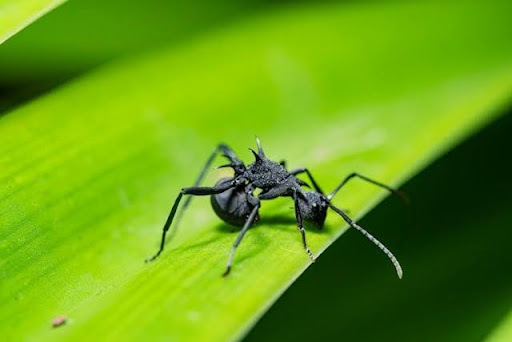
Body size and color: Carpenter ants are larger than most household ants, ranging from reddish-brown to solid black, with the same pinched waist and elbowed antennae as their flying counterparts.
Wood-nesting behavior: Carpenter ants excavate wood to build nests, favoring wood that's already moist, soft, or decaying.
Carpenter ant damage vs. termite damage:
3. Powderpost Beetles
Why they can be mistaken for termites: Both pests damage structural and decorative wood over time, and both can go unnoticed until visible damage appears.
Appearance and wood-damage signs: Powderpost beetles are small, reddish-brown to black, and leave behind tiny round exit holes along with a fine, powder-like dust (frass) beneath affected wood.
Difference from termite activity:
4. Carpenter Bees
Appearance: Carpenter bees closely resemble bumblebees, with a fuzzy, yellow-and-black thorax, but their abdomen is smooth and shiny rather than fuzzy.
Where they nest: These bees bore round, smooth tunnels into exposed, untreated wood, such as eaves, decks, and fascia boards.
How their wood activity differs from termites:
5. Acrobat Ants
Appearance and size: Acrobat ants are small, ranging from light brown to black, and are named for their habit of raising their heart-shaped abdomen over their body when disturbed.
Why they can be confused with other wood-associated pests: They often nest in moist or decaying wood and insulation, and can move into wall voids.
Key identification clues: The distinctive heart-shaped abdomen and the pinched waist typical of ants are the clearest ways to distinguish them from termites at a glance.
6. Booklice
Small, pale appearance: Booklice are tiny, soft-bodied, and pale, sometimes translucent, insects, which is easy to overlook or mistake for young termites at first glance.
Where they are usually found: They're typically found in damp, humid areas with mold or mildew, such as books, stored papers, or window sills.
Why their presence does not necessarily indicate termites: Booklice feed on mold and fungal growth rather than wood itself, so their presence points to a moisture issue rather than a termite infestation.
7. Wood Roaches
Appearance and habitat: Wood roaches are flat, oval-shaped, and light brown to reddish, commonly found outdoors under bark, in woodpiles, or beneath decaying logs.
How they differ from termites: Wood roaches have long, thread-like antennae and a distinct head and body segmentation, unlike the straight, bead-like antennae and uniform body of a termite.
Why they may appear around wood and outdoor areas: They're drawn to moist, decaying wood for shelter rather than as a food source, so their presence near wood doesn't indicate structural feeding damage the way termites do.
Professional Pest Control From Stewart's Lawn
Telling these insects apart takes a trained eye. Incorrect identification can lead to overlooking a real problem or worrying over a harmless one.
If you've spotted wood damage, winged insects, or anything you're not quite sure about, our team can take a closer look and help you understand exactly what you're dealing with.
Stewart’s Home Pest Control Program Offers:
- Bug Barrier protection: A long-lasting barrier is applied around entry points and the foundation to help keep out common household pests.
- Seasonally timed treatments: Treatments are adjusted throughout the year to match Utah’s changing pest activity.
- Full coverage, indoors and out: Visits address indoor treatments and outdoor areas where pests breed and nest, including wasp nesting in eaves and fence lines.
Ready for peace of mind about the pests around your home? Get a Free Quote from Stewart's Lawn today.
FAQs
What bugs are commonly mistaken for termites?
Flying ants, carpenter ants, powderpost beetles, and carpenter bees are the most frequently confused with termites, largely because they share a wood-associated habitat or the tendency to swarm.
How can I tell a flying ant from a termite?
Look at the waist and wings. Flying ants have a pinched waist and two pairs of unequal-length wings, while termites have a thick, straight waist and wings that are equal in size.
What does a termite look like?
Termites are typically pale to light brown, with straight antennae, a thick waist with no visible pinch, and soft, small bodies usually under half an inch long.
Do carpenter ants look like termites?
They share a similar dark coloring and wood-nesting habit, but carpenter ants have a pinched waist and elbowed antennae, both of which are absent in termites.
Do termites always have wings?
No. Only swarmers, the reproductive termites responsible for starting new colonies, have wings. Worker termites, which make up most of a colony, are wingless and rarely seen outside the wood or soil they inhabit.