.svg)

Common Ants in Utah Homes
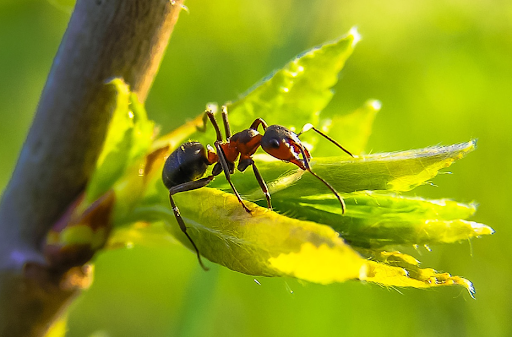
Common ants in Utah homes include pavement ants, odorous house ants, carpenter ants, field ants, and pharaoh ants. They differ in size, color, nesting location, food preference, and activity.
Some ants build colonies beneath pavement or in lawns, while others can nest inside walls, warm structural spaces, or damaged wood. For instance, carpenter ants may leave frass, a mix of wood shavings and insect remains, near wood galleries. Likewise, pavement ants can leave small piles of displaced soil near nest openings.
Key Takeaways
- Pavement ants are small, dark ants that often nest beneath concrete, sidewalks, driveways, patios, and foundation edges.
- Odorous house ants can form connected nests with multiple queens. Their trails may extend 33 to 157 feet, allowing workers to appear far from a nest.
- Carpenter ants can indicate damp or damaged wood when repeated activity occurs near windows, plumbing, doors, or wall spaces. They excavate wood for nesting but do not eat it.
- Field ants mainly nest outdoors in lawns and landscaped areas. Indoor sightings are more likely to involve workers searching for food or moisture.
- Pharaoh ants can establish several hidden indoor nests and move through buildings along plumbing, wiring, and structural spaces.
- Nest location, worker size, body shape, color, trail patterns, and waist nodes provide useful clues for distinguishing one ant species from another.
5 Common Ants Found in Utah Homes
Common ants found in Utah homes are pavement ants, odorous house ants, carpenter ants, field ants, and pharaoh ants. Each can be separated by combining appearance with where it nests and how it behaves. Homeowners may see only the worker ants, while the colony may be several feet away, outdoors, below a slab, inside a wall void, or in wood.
1. Pavement Ants
A pavement ant colony can contain thousands of workers with a single queen, and neighboring colonies may gather in large groups to fight over territory.
Appearance
- Light brown to dark brown or nearly black.
- Fine parallel grooves run along the head and middle body section.
- Two small nodes are visible between the middle and rear body sections.
Typical Size
- Workers are about 2.5 to 4 millimeters long, or close to 1/8 inch.
Where They Nest
- Colonies develop in soil beneath concrete slabs, sidewalks, driveways, patios, foundation edges, and large landscape rocks.
- Small piles of sand or displaced soil near pavement cracks can reveal a nest opening.
What Attracts Them
- They feed on many foods, with a preference for sweet, greasy, and protein-rich material.
- Cooking residue, crumbs, pet food, seeds, and dead insects can support foraging activity.
Activity
- Indoor activity is often highest during spring and early summer.
- Workers may enter through foundation cracks and expansion joints while searching for food.
- Foraging ants can travel more than 30 feet from the colony.
Main Concern
- Colonies can send large numbers of workers indoors, creating persistent trails through kitchens and other areas where food is available.
2. Odorous House Ants
Odorous house ant activity can shift indoors when heavy rain, extreme heat, or dry weather changes outdoor conditions.
Appearance
- Workers are dark brown to black and nearly the same size.
- Crushed workers release a strong odor often compared with rotten coconut or a sweet cleaning product.
- They have one waist node that is partly hidden beneath the abdomen.
Typical Size
- Workers measure about 3 millimeters, or close to 1/8 inch.
Where They Nest
- Outdoors, nests may occur in shallow soil, under rocks, and beneath other protected objects.
- Indoors, colonies can occupy wall voids, insulation, and warm, moist spaces near pipes, sinks, bathrooms, or water heaters.
What Attracts Them
- Sweets, fruit, pet food, dead insects, and honeydew are common food sources.
Activity
- Foraging can occur from about 43°F to 95°F.
- Trails may extend 33 to 157 feet.
- Colonies can spread through budding, where workers and queens form new connected nests.
Main Concern
- Colonies may contain multiple queens and tens of thousands of workers. Connected supercolonies can reach hundreds of thousands, allowing activity to spread through several parts of a property.
3. Carpenter Ants
Carpenter ant activity inside a home can point to damp or damaged wood, especially when ants repeatedly appear near windows, doors, plumbing, or wall spaces.
Appearance
- Usually black or black with reddish-brown areas.
- Workers can differ noticeably in size.
- They have one waist node and a smooth, rounded middle body section.
Typical Size
- Workers can range from about 1/4 to 1/2 inch, while winged queens of some species can reach about 3/4 inch.
Where They Nest
- Outdoors, colonies may occupy decaying trees, roots, stumps, and logs.
- Indoor nests can occur in moisture-damaged wood, wall voids, hollow doors, roofing areas, insulation, and spaces near plumbing.
- A colony may have a main nest and separate satellite nests.
What Attracts Them
- Sweets, honeydew, meat, and living or dead insects provide food.
- Wood provides nesting space; carpenter ants do not eat wood.
Activity
- Workers are mainly active at night and often forage between sunset and midnight.
- They may travel as far as 100 yards while searching for food.
Main Concern
- Nesting galleries can expand through affected wood over time.
- Frass, which can contain coarse wood shavings and insect remains, near small openings is an important sign of an active nest.
4. Field Ants
Field ants usually live outdoors in Utah yards and gardens, but may sometimes enter homes. Their soil mounds and uneven body shape can help tell them apart from carpenter ants.
Appearance
- Workers may be black, reddish-brown, or red and black.
- They have one distinct waist node.
- The middle body section has a noticeable dip or uneven profile, while carpenter ants have a smoother, rounded profile.
Typical Size
- Workers are generally 4 to 8 millimeters long, with some approaching 1/2 inch.
Where They Nest
- Colonies develop in lawns, open sunny soil, landscaped areas, under rocks, beneath logs, and around decaying wood.
- Some species build low mounds from soil, small twigs, and dried plant material.
What Attracts Them
- Workers feed on honeydew, insects, and sweet food sources.
Activity
- Scout ants may enter through small structural gaps while searching for food or moisture.
- Indoor sightings can become more noticeable during spring.
Main Concern
- Colonies can produce visible mounds in lawns and landscaped areas.
- Field ants do not have a true stinger. When disturbed, some can bite and release formic acid, which can cause a sharp, stinging sensation.
5. Pharaoh Ants
Pharaoh ants can form several connected nests inside a building, allowing an infestation to spread through areas far from where the first ants are seen.
Appearance
- Golden yellow, light red, or yellowish-brown, often with a darker abdomen.
- Workers have two waist nodes and 12-segmented antennae with a three-segmented tip.
Typical Size
- Workers are extremely small, measuring about 1/16 to 1/12 inch.
Where They Nest
- Colonies prefer warm, humid areas inside buildings.
- Nest sites include wall voids, spaces behind baseboards, under floors, and areas near furnaces, heaters, hot-water pipes, and ducts.
What Attracts Them
- Sweets, grease, proteins, baked foods, pet food, and dead insects can attract workers.
Activity
- Workers can travel between rooms through plumbing routes, electrical wiring, and other hidden structural spaces.
- Colonies have multiple queens and can contain hundreds of thousands of ants.
- Colonies can spread through budding, where queens and workers separate and establish additional nests.
Main Concern
- Their tiny size, hidden nests, and large colony networks can make the visible ants only a small part of the infestation.
Ant Problem in Your Utah Home? Let Stewart's Handle It
Get professional ant control from Stewart's when ant trails, hidden nests, or repeated indoor activity become a problem.
Serving Utah homeowners since 1972, experts from Stewart's Lawn can evaluate:
- Ant species and visible activity
- Nest and trail locations
- Activity near foundations, walls, trees, and structural wood
- Signs of multiple or hidden nests
The findings help identify where ant activity is coming from and the professional service needed. Request professional ant control from Stewart's Lawn today.
FAQs
What do pavement ants look like?
Pavement ants look like small, light brown to dark brown or nearly black ants measuring about 2.5 to 4 millimeters long. They have two waist nodes, fine parallel grooves on the head and middle body section, and may appear near pavement cracks with displaced soil.
Are carpenter ants common in Utah?
Yes, carpenter ants are common in Utah. They are usually black or black with reddish-brown areas. Workers range from about 1/4 to 1/2 inch and may nest in moisture-damaged wood, wall voids, insulation, or spaces near plumbing.
Where do ants build nests around Utah homes?
Ants build nests in different places around Utah homes depending on the species. Pavement ants often nest beneath concrete and near pavement cracks, field ants nest in lawns and soil, carpenter ants may nest in damaged wood, and pharaoh ants can nest inside wall voids and other warm indoor spaces.
Why do ants come inside during spring?
Ants come inside during spring as colonies become more active and workers expand their search for food, moisture, and new nesting areas. Pavement ant indoor problems peak during spring and early summer, while several other species also increase seasonal foraging.
When should I call a professional for ant control?
You should call a professional for ant control when activity keeps returning, ants emerge from walls or wood, several trails are present, winged ants appear indoors, or the species is unclear. Correct identification helps determine where the colony is located and its significance.