.svg)

Utah’s 10 Best Winter Plants
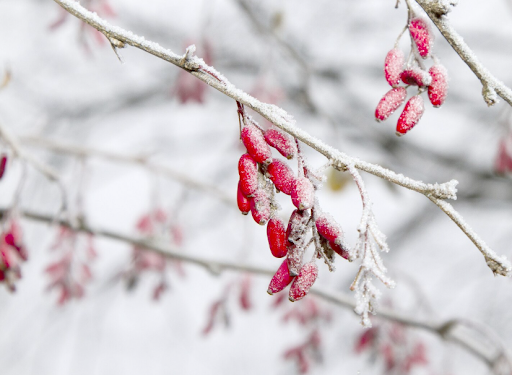
The best winter plants for Utah include Rocky Mountain juniper, Meserve holly, winter heath, wintergreen, creeping Oregon grape, snowdrops, hellebores, bergenia, pansies, and ornamental kale. Some remain green through winter, while others provide colored foliage or flowers during late winter and early spring.
Utah soils average about pH 8.0, and many have low organic matter and elevated salts. High pH reduces the availability of iron and other micronutrients, while frozen soil, dry air, winter sun, and wind can increase moisture loss from evergreen foliage.
Key Takeaways
- Rocky Mountain juniper suits dry, exposed landscapes and can handle areas receiving as little as about 10 inches of annual precipitation.
- Creeping Oregon grape is useful for groundcover and dry shade and naturally occurs at Utah elevations approaching 9,800 feet.
- Snowdrops provide some of the earliest flowers, while hellebores suit partly shaded beds and bergenia adds reddish-bronze winter leaves.
- Pansies provide concentrated flower color, while ornamental kale and cabbage add colorful leaves and structure to winter beds.
- Wintergreen requires acidic soil below pH 6.0, making it a more specialized choice where Utah soils are commonly alkaline.
Evergreen Shrubs for Year-Round Color
Evergreen shrubs provide year-round color by retaining their foliage through Utah winters, when many deciduous plants are dormant. They can also provide structure, screening, or groundcover, although suitability depends on cold tolerance, soil conditions, drainage, and winter moisture stress.
1. Rocky Mountain Juniper (Juniperus scopulorum)
Rocky Mountain juniper is a Utah-native conifer with dense blue-green foliage and an upright growth habit. Cultivars range from narrow vertical forms to broader landscape specimens.
Why it works in Utah winters: The species occurs in semi-arid climates, tolerates temperature extremes down to about -35°F, and can persist with roughly 10 inches of annual precipitation. It also grows in soils derived from limestone, sandstone, shale, and other mineral parent materials.
Best spot to plant it:
- Sunny locations
- Well-drained sites
- Exposed landscape areas
What it needs in winter: Drainage and root-zone moisture that remains sufficient during extended dry periods.
What homeowners should watch for: Browning concentrated on exposed foliage can indicate winter drying or wind injury.
Best for:
- Screening
- Vertical structure
- Exposed landscapes
- Lower-water designs
2. Meserve Holly (Ilex × meserveae)
Meserve holly is a dense broadleaf evergreen with glossy blue-green leaves. Female plants can hold red berries into winter when compatible pollination has occurred.
Why it works in Utah winters: Cold-hardy selections are suited to climates where average extreme winter lows reach approximately -20°F to -10°F. The larger limitation is soil chemistry, as Meserve holly favors moist, well-drained, slightly acidic soil.
Best spot to plant it:
- Protected sites
- Full sun to partial shade
- Areas with reduced winter-wind exposure
What it needs in winter: Well-drained soil with available moisture.
What homeowners should watch for:
- Yellow leaves with greener veins;
- Leaf-edge scorch on exposed foliage.
High-pH soil can make micronutrient availability a concern.
Best for:
- Hedges
- Foundation plantings
- Winter berries
- Broadleaf evergreen structure
3. Winter Heath (Erica carnea)
Winter Heath is a low, spreading evergreen shrub with fine foliage and pink, purple, magenta, or white flowers that can appear from late winter into early spring.
Why it works in Utah winters: It tolerates acidic, neutral, and alkaline soils and remains evergreen through freezing weather. It can tolerate winter lows of roughly -4°F to 5°F, so exposure becomes important where temperatures fall below this range.
Best spot to plant it:
- Sunny or partly shaded beds
- Sites with reliable drainage
What it needs in winter: Moist but well-drained soil and a site within its temperature tolerance.
What homeowners should watch for: Persistent wetness raises the risk of root diseases, including Phytophthora.
Best for:
- Low borders
- Ground-level foliage
- Late-winter flowers in Utah
4. Wintergreen (Gaultheria procumbens)
Wintergreen is a creeping broadleaf evergreen with glossy leaves and red berry-like fruit. Cold weather can deepen the foliage to red or burgundy.
Why it works in Utah winters: Wintergreen can tolerate extreme winter lows near -40°F. Its limiting factor is soil: it favors moist, well-drained soil below pH 6.0, which is far more acidic than typical Utah soil.
Best spot to plant it:
- Shaded or partly shaded areas
- Sites with naturally acidic soil
What it needs in winter: Acidic soil, drainage, and adequate soil moisture.
What homeowners should watch for: Weak growth or abnormal foliage color where soil pH is too high.
Best for:
- Woodland-style planting areas
- Low evergreen cover
5. Creeping Oregon Grape (Mahonia repens)
Creeping Oregon grape is a Utah-native evergreen groundcover with holly-like leaves, yellow spring flowers, and blue-black berries. Its foliage can develop red or purple tones during cold weather.
Why it works in Utah winters: Natural populations occur across elevations from about 3,600 to 9,800 feet in Utah and in climates receiving as little as 12 inches of precipitation annually. It tolerates drought, winter sun, rocky soils, and a broad range of exposures.
Best spot to plant it:
- Partial-shade or dry-shade areas
- Sites needing low evergreen cover
What it needs in winter: Well-drained soil; prolonged saturation is poorly tolerated.
What homeowners should watch for: Decline in areas with poor drainage or high salt accumulation.
Best for:
- Groundcover
- Dry-shade areas
- Native-oriented landscapes
- Winter foliage
Winter-Hardy Flowering Perennials
Winter-hardy flowering perennials survive belowground or retain part of their foliage through winter, then produce flowers as temperatures begin to moderate.
6. Snowdrops (Galanthus)
Snowdrops are small perennial bulbs with white bell-shaped flowers. They emerge in late winter or early spring, sometimes while snow remains on the ground.
Why it works in Utah winters: It can tolerate extreme winter lows near -40°F. Snowdrop biology is also adapted to winter chilling; seed germination requires exposure to temperatures below about 20°F.
Best spot to plant it:
- Well-drained beds
- Full sun or partial shade
What it needs in winter: Cold exposure and soil that does not remain saturated.
What homeowners should watch for: Persistent waterlogging around underground bulbs.
Best for:
- Very early flowers
- Winter-to-spring transition areas
7. Hellebores (Helleborus)
Hellebores are clump-forming perennials with leathery foliage and nodding flowers in white, pink, green, burgundy, or purple tones.
Why it works in Utah winters: Many landscape hellebores tolerate average extreme winter temperatures approaching -30°F. Helleborus orientalis also tolerates neutral to alkaline soil, giving it an advantage where soil pH is naturally high.
Best spot to plant it:
- Partly shaded beds
- Wind-protected locations
- Sites with good drainage
What it needs in winter: Moist, well-drained soil and protection from intense winter exposure.
What homeowners should watch for: Crown rot, leaf spotting, or cold-damaged foliage. Hellebores are toxic when ingested.
Best for:
- Shaded beds
- Late-winter to early-spring flowers
8. Bergenia (Bergenia cordifolia)
Bergenia is a clump-forming perennial with thick, leathery leaves that can shift from green to reddish-bronze or purple during winter. Pink flowers appear on upright stems in spring.
Why it works in Utah winters: It can tolerate extreme winter lows near -40°F and grows in acidic, neutral, and alkaline soils. It is also drought-resistant once established.
Best spot to plant it:
- Full sun to partial shade
- Moist, well-drained soil
What it needs in winter: Drainage and protection from severe drying wind.
What homeowners should watch for: Leaf injury from exposed winter wind and frost damage to early flower buds.
Best for:
- Winter foliage
- Groundcover
- Borders
- Early spring flowers
Cold-Hardy Annuals for Winter Color
Cold-hardy annuals can remain colorful through freezes and milder winter periods. However, prolonged severe cold can end their seasonal display.
9. Pansies (Viola × wittrockiana)
Pansies are compact flowering annuals available in a wide range of colors, including yellow, purple, blue, white, orange, and multicolored forms.
Why it works in Utah winters: Healthy, well-rooted pansies can survive brief temperatures of about 0°F to 9°F. Their foliage may wilt below 25°F, while root activity slows sharply when soil temperatures fall below about 45°F.
Best spot to plant it:
- Bright locations
- Well-drained beds
- Areas sheltered from the drying winter wind
What it needs in winter: Unfrozen root-zone conditions during active periods.
What homeowners should watch for: Gray-green wilt during hard freezes and persistent decline where soil remains frozen.
Best for:
- Concentrated seasonal color
- Winter flower displays
10. Ornamental Kale and Cabbage (Brassica oleracea)
Ornamental kale and cabbage form dense rosettes of white, pink, red, or purple foliage. Their color becomes more pronounced as autumn temperatures decline.
Why it works in Utah winters: Cold-hardened plants can tolerate temperatures around 5°F. Its leaf colors also become more intense as temperatures fall below about 50°F.
Best spot to plant it:
- Sunny locations
- Well-drained landscape beds
What it needs in winter: Temperatures within its cold limit and soil that drains reliably.
What homeowners should watch for: Leaf damage after extended periods below its approximate 5°F tolerance.
Best for:
- Rosette-shaped leaves
- Massed seasonal color
- Winter bed structure
Give Your Utah Landscape Winter-Ready Plant Care With Stewart’s
Stewart’s has provided professional lawn, tree, and shrub care in Utah since 1972. Our services are designed around the plant-health challenges found in the state’s alkaline, semi-arid conditions.
Winter stress can reveal or worsen underlying problems in trees, shrubs, and planting beds. Depending on the issue, we provide professional services including:
- Tree and shrub care: Fertilization and targeted services for insects, borers, and fungal problems.
- Tree injections: Professional care for iron chlorosis, tree diseases, and specific insect problems.
- Flowerbed care: Scheduled weed control treatments for ornamental planting areas.
If yellowing leaves, dieback, recurring insect damage, or declining shrubs are affecting your landscape, schedule an on-site evaluation with Stewart’s Lawn to identify the plant-health issue and appropriate professional care.
FAQs
What plants survive winter in Utah?
Plants that survive Utah winters include Rocky Mountain juniper, creeping Oregon grape, snowdrops, hellebores, bergenia, and other cold-hardy evergreen plants. Their survival also depends on winter temperatures, wind exposure, soil drainage, available moisture, and soil conditions.
What are the best evergreen plants for Utah winters?
Rocky Mountain juniper and creeping Oregon grape are two of the best evergreen plants for Utah winters. Meserve holly, winter heath, and wintergreen can also grow well where the temperature, soil, drainage, and winter exposure meet their needs.
What plants are best for cold, high-elevation areas of Utah?
Rocky Mountain juniper, creeping Oregon grape, snowdrops, hellebores, and bergenia are good choices for colder Utah landscapes. Creeping Oregon grape naturally grows at Utah elevations approaching 9,800 feet, showing its ability to tolerate colder, higher-elevation conditions.
Which winter plants in Utah require the least water?
Rocky Mountain juniper and creeping Oregon grape are among the lower-water winter plant choices. Rocky Mountain juniper can grow in areas receiving roughly 10 inches of annual precipitation, while creeping Oregon grape occurs naturally in Utah environments receiving around 12 inches annually.
How can Stewart’s help protect my landscape before winter?
Stewart’s Lawn can help prepare landscapes for winter by identifying and addressing plant-health problems during scheduled visits. Professional services cover nutrient deficiencies, iron chlorosis, insects, borers, diseases, and other concerns affecting trees, shrubs, and flowerbeds.