.svg)

Natural Grass vs. Artificial Turf
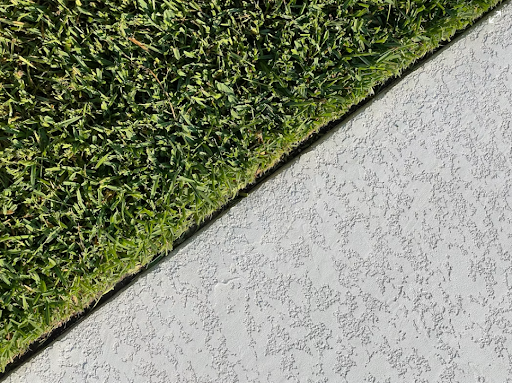
Natural grass and artificial turf differ in how they use water, handle summer heat, interact with soil, respond to heavy use, and recover from damage. Natural grass needs water and nutrients to grow, but it generally stays cooler, supports living soil, and some grass types can regrow after wear.
Artificial turf needs very little routine water and keeps a more consistent appearance, but it can become much hotter in direct sunlight and cannot repair itself through new growth. These differences are especially important when choosing a lawn surface for Utah’s dry, hot summer conditions.
Key Takeaways
- Natural grass is a living surface connected to soil, while artificial turf uses synthetic fibers installed over a prepared base.
- Natural grass needs regular water during active growth, while artificial turf uses very little routine water.
- Natural grass generally stays cooler, while artificial turf can become much hotter in direct sunlight.
- Natural grass changes with seasons and growing conditions, while artificial turf keeps a more consistent appearance.
- Some natural grasses can recover from moderate wear through new growth, while damaged artificial turf requires physical repair.
Natural Grass vs. Artificial Turf at a Glance
Natural grass is a living lawn that needs water, nutrients, and regular care, while artificial turf is a man-made surface that does not grow and needs different types of care. Here are some main differences between natural grass and artificial turf at a glance.
Environmental Considerations of Natural Grass vs. Artificial Turf
Natural lawn benefits include natural cooling and keeping living roots connected to the soil, although natural grass requires more water. Artificial turf uses almost no water for growth, but it can become much hotter, change how rainwater moves, and create synthetic waste over time.
Water Use
Natural grass needs water to grow and stay healthy, while artificial turf needs no routine water for growth. This difference is important in Utah, where about 60% of municipal and industrial water use goes toward outdoor landscapes.
The main differences are:
- Water demand: Natural grass loses water as moisture evaporates from the soil and passes through the grass blades. Cool-season grasses average 6.25 millimeters per day under well-watered conditions. Artificial turf has no living roots or leaves, so water is mainly used occasionally for cleaning or cooling the surface.
- Grass type: Natural grass water needs change with grass type, heat, sunlight, wind, roots, and soil. For a water-efficient lawn, drought-tolerant turf varieties can use about 30% less water than conventional varieties.
- Rainwater: Natural grass allows rain to enter the soil, although compacted soil can slow this process. Artificial turf can capture less rainfall and create more runoff, depending on its backing, base, and drainage.
Surface Temperature
Natural grass stays cooler as water moves through the plant and leaves as vapor, while artificial turf can store much more heat under direct sunlight.
The temperature differences include:
- Surface heat: Natural grass stays cooler as water moving through the plant helps remove heat from the surface. Artificial turf can be about 17°F to 61°F hotter than natural grass under comparable conditions.
- Heat retention: Natural grass contains moisture and living plant tissue that supports cooling. Artificial fibers contain little moisture, limiting the amount of heat that can leave through evaporation.
- Temperature changes: Natural grass temperature varies with moisture and plant condition. Artificial turf temperature varies with fiber type, infill, direct sunlight, shade, wind, and nearby concrete or stone.
Soil and Water Movement
Natural grass keeps living roots connected with the soil, while artificial turf covers the ground with synthetic material and a prepared base. This changes how soil functions and how rainwater moves.
The main differences are:
- Water movement and drainage: Natural grass allows water to pass through the lawn and into the soil, with drainage affected by soil type, compaction, slope, and roots. Artificial turf moves water through its backing and prepared base, with drainage affected by the base, slope, outlets, and soil underneath.
- Soil activity: Natural grass roots create spaces in the soil and add organic material as old roots break down. Artificial turf has no living roots and does not provide these natural soil processes.
- Runoff: Natural grass can capture and filter rainfall through the soil. Artificial turf generally has lower rainfall capture and higher runoff potential, and the runoff may carry synthetic particles and other pollutants.
Manufactured Materials and End of Life
Natural grass continually replaces living leaves and roots, while artificial turf contains manufactured materials that wear down and eventually need to be removed.
The material differences include:
- Materials: Natural grass consists of living plants rooted in soil. Artificial turf can contain polyethylene, polypropylene, or nylon fibers, backing, and different types of infill.
- Breakdown and microplastics: Natural grass plant material breaks down naturally. Artificial turf fibers can wear into smaller plastic particles, and turf fibers have accounted for up to 15% of mesoplastics and macroplastics detected in sampled river and coastal waters.
- End of life: Natural grass continually replaces old plant tissue through new growth. Artificial turf contains several materials that can be difficult to separate for recycling, so worn turf eventually requires disposal or specialized recycling.
Natural Grass or Artificial Turf: Which Should You Choose?
When comparing natural grass vs. artificial turf, choose natural grass when a living, cooler lawn and soil interaction matter most, while artificial turf may suit areas where very low routine water use and a consistent appearance are priorities.
Natural grass may suit properties where:
- A living, cooler surface is important.
- Seasonal color changes are acceptable.
- Healthy soil can support strong roots.
- Recovery from moderate wear is valuable.
- Sunlight and soil conditions support healthy grass growth.
Artificial turf benefits may be especially useful for properties where:
- Very low routine water use is important.
- A consistent year-round appearance is preferred.
- The area receives frequent foot traffic.
- The site has suitable drainage.
- Summer surface heat in exposed areas is acceptable.
Care for Your Natural Lawn With Stewart’s
Professional Utah lawn care can help natural grass handle nutrient needs, weeds, grubs, soil conditions, and seasonal turf stress. Stewart’s has served Utah homeowners since 1972, bringing decades of experience with local lawn conditions.
The Stewart’s Lawn Care Program includes:
- Scheduled visits
- Professional fertilization
- Weed control
- Grub control
Keep your natural lawn healthy, dense, and better prepared for seasonal stress. Schedule an appointment with Stewart’s for professional lawn care.
FAQs
Does artificial turf use less water than natural grass?
Yes. Artificial turf uses very little routine water because it does not need water to grow. Natural grass needs regular water during active growth, with the amount changing according to grass type, heat, sunlight, wind, and soil conditions.
Does artificial turf get hotter than natural grass?
Yes. Synthetic turf can become much hotter when exposed to direct sunlight. Natural grass stays cooler as water moving through the plant helps remove heat, while artificial turf can hold more heat at the surface.
Which requires more ongoing care, natural grass or artificial turf?
Natural grass generally needs more ongoing care since it is a living surface. It needs water, nutrients, and regular cutting during active growth, while artificial turf does not grow but can develop drainage, wear, or damage concerns.
Can natural grass recover from damage better than artificial turf?
Yes. Some grass types can spread and grow back into damaged or thin areas. Artificial turf cannot regrow, so damaged fibers, seams, or sections may require physical repair when they become worn or damaged.