.svg)

How to Get Rid of Mushrooms in Your Lawn
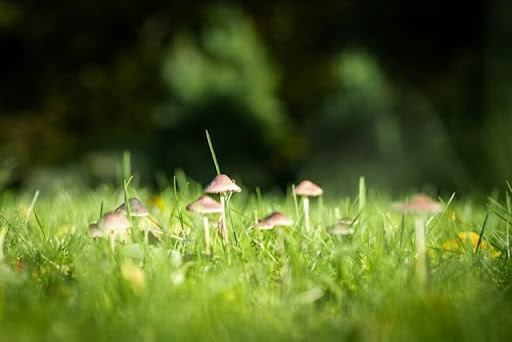
The most effective answer to how to get rid of mushrooms in your lawn is to remove the visible caps and then correct what feeds them underground. Mushrooms are the fruiting bodies of a fungus that lives on buried organic matter and thrives in damp soil.
To stop them for good, you have to remove what keeps that fungus alive. Below, we explain what causes lawn mushrooms, when they point to a deeper lawn problem, and how to stop them from growing back.
Key Takeaways
- Mushrooms grow from a fungus in your soil.
- Damp soil, buried roots, and thatch feed it.
- Most are harmless, but some are toxic if eaten.
- Drainage, aeration, and thatch removal keep them away.
Why Are Mushrooms Growing in Your Lawn?
Mushrooms appear when fungi in your soil break down buried organic matter like old tree roots, stumps, or thick thatch.
Excess Moisture and Poor Drainage
Moisture is what turns a hidden fungus into visible mushrooms. Soil that stays wet after rain or a persisting snowmelt gives fungi the conditions they need to fruit.
Conditions That Trigger Lawn Mushrooms
- Heavy Rain and Snowmelt: Spring storms and melting snow saturate the soil faster than it can drain.
- Frequent Watering: Light, frequent watering keeps the top layer of soil damp, which favors fungal growth.
- Poor Drainage: Low spots and clay-heavy soil hold standing water long after the rain stops.
- Limited Sunlight: Shaded areas dry slowly, so moisture lingers in the soil for days.
- Compacted Soil: Packed soil blocks water absorption, which is why lawn aeration for mushrooms often makes a difference.
Decaying Organic Matter Beneath the Soil
Fungi act as natural soil decomposers through a hidden network of threads called mycelium that feeds on carbon-rich materials. Because mushrooms are merely the reproductive stage of this underground network, professional lawn mushroom control focuses on eliminating the buried food supply itself.
Common Food Sources for Lawn Fungi
- Old Tree Roots: Roots from removed trees can decay for years and feed fungi long after the tree is gone.
- Buried Stumps and Wood: Stumps and wood pieces left beneath the surface become long-term food sources.
- Thick Thatch: Thatch over half an inch holds dead grass and roots for fungi.
- Leaf Buildup: Fallen leaves left to decompose on the turf add fresh organic matter to the soil.
- Declining Trees: Mushrooms at the base of a tree can signal root decay fungi that affect the tree's health.
Are Mushrooms Bad for Your Lawn?
Most lawn mushrooms are harmless and indicate healthy, nutrient-rich soil. However, certain situations still require professional removal rather than waiting them out.
When Lawn Mushrooms Become a Concern
- Grass Health: Most mushrooms leave turf unharmed and fade once lawn drainage problems are corrected and the soil dries out.
- Brown Fairy Rings: Dense fungal growth can make soil repel water, leaving rings of dead grass.
- Children and Pets: Some lawn species are toxic if eaten, which poses a real risk to young kids and curious dogs.
- Skin Contact: Touching lawn mushrooms is generally safe, since the danger comes from ingestion.
- Curb Appeal: Scattered clusters and rings can make a healthy lawn look uneven..
What Causes Mushrooms to Keep Coming Back?
Mushrooms return because the fungus behind them survives underground long after the caps have disappeared.
Main Causes of Recurring Lawn Mushrooms
- Underground Mycelium: Removing the caps leaves the fungal network intact, so professional lawn mushroom control targets the soil it lives in.
- Airborne Spores: A single mature mushroom releases millions of spores that settle into other damp spots in your yard.
- Poor Drainage: Lawn drainage problems keep the soil from drying out between wet spells, so the fungus fruits repeatedly instead of once.
- Compacted Soil: Low airflow slows the breakdown of buried organic matter, and lawn aeration for mushrooms shortens how long that food supply lasts.
- Thick Thatch: A spongy thatch layer creates a shallow feeding zone, so mushrooms can appear after even a light rain.
- Buried Roots or Stumps: Mushrooms often trace the path of old roots and return to the same spots until the wood fully decomposes.
- Excess Watering: Automated watering schedules that run after rain add moisture the soil doesn't need, which calls for adjusted lawn care for mushrooms.
- Expanding Fairy Rings: Fairy ring fungi grow outward each year and return in wider circles until professional lawn fungus treatment addresses the soil.
How to Get Rid of Mushrooms in Lawn
Pulled caps return after the next rain because the fungus below survives, so the lasting solution is to remove their buried food source and excess moisture.
Improve Soil Drainage and Moisture
Mushrooms need damp soil to grow, so keeping your soil drier is a key part of lawn care for mushrooms.
Ways to Reduce Lawn Moisture
- Deep, Infrequent Watering: Longer sessions on fewer days let the topsoil dry between waterings, which gives mushrooms fewer damp days to sprout.
- Early Morning Watering: Grass watered at dawn dries by midday, while evening watering leaves the soil wet overnight, when mushrooms often pop up.
- Leveled Low Spots: Low areas where water pools are among the most common lawn drainage problems, and mushrooms tend to cluster in these soggy spots.
- More Sunlight: Less tree and shrub cover lets sunlight dry the damp patches, so mushrooms have fewer shaded and wet places to grow.
Aerate Compacted Lawn Soil
Hard, packed soil holds water near the surface, and breaking it up helps keep mushrooms from coming back.
How Aeration Relieves Compaction
- Core Aeration: Small soil plugs are pulled out so water drains deeper and the surface dries faster, which makes this the most important step in lawn aeration for mushrooms.
- Moist Soil Beforehand: A deep watering one to two days before aeration softens the soil, so plugs come out deeper and more of the compacted layer is opened up.
- Plugs Left in Place: The soil plugs left on your lawn break down within a few weeks, feeding your grass and thinning the thatch layer where mushrooms often grow.
- Right Timing: Spring and fall aeration gives Utah's cool-season grasses time to recover and leaves your soil draining well before the wettest months.
Reduce Thick, Moisture-Holding Thatch
Thatch is the layer of dead grass and roots that builds up between your grass and the soil. A thin layer is harmless, but a thick one holds moisture like a sponge and gives mushrooms a steady place to grow.
- Healthy Depth: Thatch under half an inch rarely causes mushrooms, but thicker layers stay damp and give fungi food right at the surface.
- Power Dethatching: A power dethatcher lifts out the damp, matted layer mushrooms sprout from, which makes professional lawn mushroom control more effective.
- Balanced Fertilization: Excess nitrogen builds thatch quickly, and more thatch means more food for the fungi behind mushrooms.
- Grass Type: Kentucky bluegrass, common in Utah lawns, builds thatch fast, which makes these lawns more prone to mushrooms.
Increase Sunlight in Shaded Areas
Shaded parts of your lawn stay damp long after the rest of the yard has dried. When more sunlight and air reach these spots, the soil dries sooner, and fungi have less time to grow.
Ways to Open Up Shade
- Raised Canopies: When a tree's lower branches are removed, more morning sun reaches the grass and dries it faster.
- Open Shrub Borders: Thick shrubs along the lawn's edge block the breeze, while thinner borders let air move across the grass.
- Cleared Debris: Fallen leaves and pet waste give fungi extra food, so their removal makes lawn care for mushrooms more effective.
- Shade-Tolerant Grass: Fine fescue grows better in low light than Kentucky bluegrass, which keeps shaded spots thicker and healthier.
Find Buried Organic Matter Underground
When mushrooms return to the same spot year after year, something is usually decaying underneath. The fungus will keep coming back there until that material breaks down or is removed.
What Often Lies Beneath
- Old Tree Roots: You can remove a ground stump, but if its large roots stay underground, it can feed fungi for years.
- Construction Leftovers: Scrap lumber and sawdust are sometimes buried during final grading around newer Utah homes, and fungi feed on them as they rot.
- Former Landscaping: If your yard once had shrub beds or wood mulch, old roots and chips may still sit under the grass and feed the fungi.
- Growth Patterns: Mushrooms that pop up in a straight line are often growing along a buried root, a sign that the problem calls for professional lawn fungus treatment rather than surface cleanup.
Build Healthy, Resilient Turf
Healthy grass won't stop fungi completely, but it uses more of the moisture in your soil and recovers faster when mushrooms appear.
What Keeps Turf Strong
- Seasonal Fertilization: Balanced feedings keep your lawn's color even and help hide the dark green rings fungi often leave behind.
- Deep Roots: Active roots pull more water from the soil, leaving less dampness for mushrooms to use.
- Grub Control: When grubs stay away, grass roots stay alive, and fungi have less dead material in the soil to feed on.
- Scheduled Care: Regular visits from professional lawn care in Utah catch these issues before mushrooms become a repeat problem.
Professional Lawn Mushroom Control
Recurring mushrooms signal wet, compacted soil or decaying matter underground. Since 1972, Stewart's has provided professional lawn care in Utah that targets these causes beyond the caps.
- Aeration Service: Core aeration loosens compacted soil and eases lawn drainage problems, so mushrooms lose the damp ground they need.
- All-Inclusive Lawn Program: Six visits of fertilization, weed control, and grub control build turf that handles wet spells better.
- On-Site Evaluations: Technicians flag the thick thatch, heavy shade, and buried wood that keep mushrooms returning.
Contact Stewart's today for professional lawn mushroom control that stops the cycle at its source.
FAQs
How do I get rid of mushrooms in my lawn permanently?
No product permanently kills the fungus, since it lives until its buried food source fully decomposes. Long-term results come from clearing that material, correcting lawn drainage problems, and relieving compaction with lawn aeration for mushrooms.
Why do mushrooms suddenly appear in my grass?
Mushrooms appear suddenly because rain or a stretch of damp days triggers the underground fungus to fruit, often overnight.
Does Stewart's Lawn remove mushrooms from lawns?
No. Mushroom removal is not a standalone Stewart's service. Stewart's Aeration Service targets the compaction and thatch conditions fungi thrive in, while buried stumps or grading issues are best handled by a landscaper
Does Stewart's provide professional lawn care for fungus problems?
Stewart's can address the soil conditions that contribute to lawn mushrooms and fungus through its Aeration Service and Lawn Care Program. PHC Fungus Services are for trees and shrubs, not turf.